


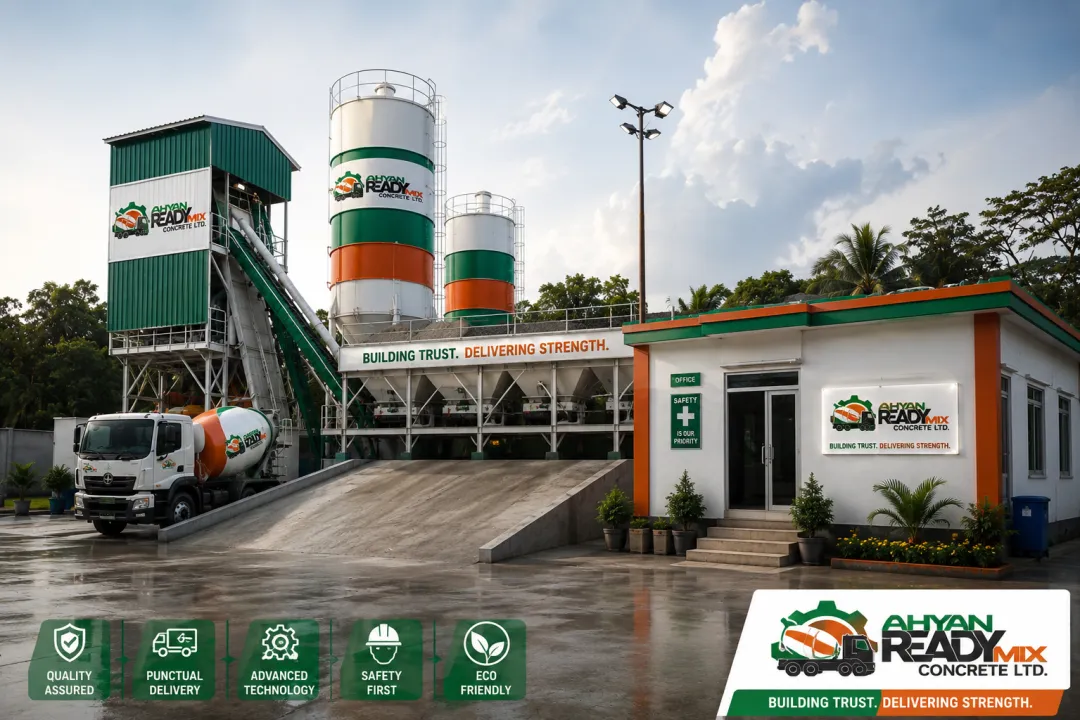
Concrete Pouring Challenges During Rainy Season and Our Solutions
The rainy season poses significant challenges to the construction industry, especially in concrete pouring and setting. Unexpected downpours, high humidity, and site inaccessibility can severely affect the quality, timing, and durability of concrete works. However, at Ahyan Ready Mix Concrete, we take pride in addressing these challenges with proactive strategies, advanced technology, and expert planning. Below are the key challenges during the rainy season and how Ahyan Ready Mix Concrete effectively overcomes them:
Water-Cement Ratio Disturbance
Rainwater directly impacts the water-cement ratio of concrete. When concrete is poured in the rain, the additional moisture can dilute the mix, weakening the final strength and durability of the structure. At Ahyan Ready Mix Concrete, we ensure that our premixed concrete is delivered with precise control of water content. In the event of sudden rain during pouring, we deploy covers and plastic sheeting to prevent water contamination and ensure structural integrity.
Surface Washout and Segregation
One of the major issues during rainy conditions is surface washout, where rainwater erodes the top layer of fresh concrete. This can lead to a weak surface finish and compromised aesthetics. Additionally, heavy rain can cause segregation, where the aggregates separate from the cement paste. We counter this by using advanced admixtures that enhance the cohesion of the mix. Our team also closely monitors weather forecasts to time deliveries during dry intervals and uses waterproof covers during and after pouring to protect the concrete surface.
Delays in Setting and Curing Time
Excess moisture and lower temperatures during the monsoon can slow down the setting time of concrete. This delay in curing increases the risk of cracking and reduced durability. Ahyan Ready Mix Concrete utilizes special curing accelerators during the rainy season to balance the setting time. Our engineers tailor the mix design according to seasonal requirements, ensuring optimal performance even in humid and wet conditions.
Site Inaccessibility and Muddy Ground Conditions
Rain often leads to waterlogged or muddy construction sites, making it difficult for transit mixers to access the pouring location. Slippery or damaged access roads can delay delivery or lead to safety hazards. To solve this, Ahyan Ready Mix Concrete offers customized delivery planning. We assess the site conditions in advance, and if needed, we use pumps and extended chutes to pour from a safe distance. Our logistics team also works closely with clients to schedule early morning or mid-day deliveries when ground conditions are most manageable.
Safety Hazards for Workers and Equipment
Wet surfaces increase the risk of slips, trips, and falls at the construction site. Electrical equipment used during pouring can become hazardous in rainy conditions. Our team prioritizes safety by ensuring all personnel wear weather-appropriate PPE (personal protective equipment) and by grounding electrical tools properly. All our mixer trucks and tools are inspected for rain-readiness, and our site supervisors are trained to follow strict safety protocols during adverse weather.
Poor Bonding with Reinforcements
When rebar is wet or rusted due to continuous rain exposure, the bond between the reinforcement and the concrete may weaken, compromising structural strength. Ahyan Ready Mix Concrete recommends covering reinforcement bars before concrete placement and uses anti-corrosion admixtures when necessary. Our site team ensures all rebar is dry and clean before pouring, and we advise clients to use protective tarpaulins to shield steel reinforcement from direct rain.
Scheduling Disruptions and Project Delays
Rain can be unpredictable, causing sudden halts to scheduled pours. Such interruptions can create gaps in the construction timeline, affect the continuity of large slabs, and increase labor costs. Ahyan Ready Mix Concrete addresses this by providing a highly responsive customer support team. Our flexible scheduling system allows rescheduling or prioritization of deliveries depending on real-time weather updates. Moreover, we keep additional manpower on standby during the rainy season to manage tight schedules efficiently.
Concrete Strength Reduction and Quality Issues
If rainwater enters the formwork or gets mixed into the concrete after it has been placed, the final strength of the structure may be significantly compromised. The hardened concrete may develop surface scaling or honeycombing. At Ahyan Ready Mix Concrete, we use slump retaining admixtures and high-performance cement to ensure strength retention. We also provide guidance to our clients on how to use temporary covers and formwork sealing to prevent rainwater intrusion.
Curing Difficulties in Continuous Rain
Curing is essential for concrete to reach its full strength and durability. Inconsistent curing during rain can lead to surface cracks, shrinkage, and compromised performance. To address this, we offer curing compounds and sheets that prevent moisture loss even during light rains. In cases of prolonged rain, our engineers recommend delayed de shuttering and extended curing periods using covered wet burlap or curing blankets to ensure adequate hydration.
Increased Risk of Cold Joints
When concrete pouring is interrupted due to sudden rainfall, the cold joints formed between old and new concrete layers can weaken the structural bond. Our team monitors such risks by maintaining a continuous pouring strategy. If a break is unavoidable, we use bonding agents and retarding admixtures to treat previously poured sections, ensuring better adhesion and structural strength when the next layer is placed.
Weather-Resistant Mix Designs
Generic concrete mixes may not perform optimally during the rainy season. At Ahyan Ready Mix Concrete, we offer tailor-made mix designs engineered for seasonal conditions. These include low water-cement ratios, superplasticizers for workability, and air entraining agents to improve resistance against moisture and shrinkage. This approach ensures that our concrete remains durable, weather-tolerant, and strong regardless of external conditions.
Post-Pour Protection Measures
After concrete has been placed, it must be protected from rain during the critical first few hours of setting. We supply waterproof tarpaulin covers along with our delivery, and our quality control engineers supervise protection measures when needed. We also advise our clients to keep temporary roofing arrangements ready at the site, especially for large slab pours during the monsoon.
Communication and Weather Monitoring
Timely and accurate communication with clients is crucial during the rainy season. At Ahyan Ready Mix Concrete, we have a dedicated customer service and logistics team that tracks weather forecasts daily. We inform site engineers in advance about possible disruptions and help them prepare with alternate plans. This reduces uncertainty and ensures better coordination on pour days.
Emergency Backup Services
We understand that despite all planning, weather can still take an unexpected turn. That’s why Ahyan Ready Mix Concrete maintains a ready fleet and support team to handle urgent rescheduling or emergency deliveries. If a pour must be stopped midway, our team assists with setting retarders, covering strategies, and preparing for a smooth continuation once conditions improve.
Conclusion
The rainy season need not halt construction progress. With proper planning, technological support, and expert execution, concrete pouring can be done efficiently even in challenging weather. At Ahyan Ready Mix Concrete, we combine scientific mix designs, reliable delivery, and site-specific strategies to ensure that your project stays on track rain or shine. Whether it's adjusting to wet site conditions or ensuring top quality concrete, we remain your trusted partner in construction success throughout the year.